
The Mental Atlas Method
Harness Your Spatial Intelligence to Supercharge Cognitive Performance
Developed by educators with cognitive science degrees from Vanderbilt University, Ted Shachtman and Dylan Kistler, the Mental Atlas Method is a novel structured thinking framework that synthesizes the Mind Palace, properties of spatial maps present in individuals with high visuospatial abilities, and dual coding to improve learning speed, knowledge retention, and fluid reasoning. The Atlas is currently under research with Northwestern Professor of Educational Psychology David Uttal, and completely free to learn.
-
The Mental Atlas Method is an advanced mnemonic system built upon the traditional concept of a memory palace, which involves placing vivid 3D objects within a familiar space to aid recall. Unlike traditional memory palaces, where these objects directly represent concrete items—such as visualizing a zucchini to remember to buy one at the grocery store—or rely on keyword associations, like picturing a sandy watermelon ("sandia") to recall the Spanish word for watermelon, the Mental Atlas uses analogical symbols to represent abstract concepts.
In the Mental Atlas Method, you first create symbolic 3D models that analogically represent the concept you wish to remember. For example, instead of visualizing “heatstroke” by picturing someone rowing with a burning oar (heat-stroke) you might visualize an animal falling over and panting to represent heatstroke. However, since this analogical imagery does not inherently contain meaning, you must use dual coding to establish a firm connection between the symbol and its intended concept. Dual coding involves visualizing the chosen 3D analogical model while simultaneously verbally describing or mentally articulating the concept it represents. This simultaneous visual-verbal encoding process transforms your imagery into a highly durable "icon," ensuring both the visual and semantic aspects of the concept are strongly linked and easily retrievable.
This icon-creation process can accommodate any concept, regardless of complexity. More intricate or abstract concepts simply require more detailed and sophisticated visual symbols and more explicit verbal descriptions. Repeatedly performing this encoding procedure allows you to build up an extensive network of hundreds or even thousands of these analogical icons within a large, familiar visual space—such as your hometown—creating a vast "mental atlas."
Icon Example: To represent the concept “The abstract idea of a feat that can be observed by others, which provides the performer of the feat notoriety for their abilities”, you would create an analogical model. One possible model might be a large number of people surrounding a strong man, who is lifting a massive boulder. After creating this model, you would visualize it while speaking “This is the abstract idea of a feat that can be observed by others, which provides the performer of the feat notoriety for their abilities. Examples of this concept are a discussion of what feat might be required to achieve fame in a certain country, or in a heated debate about whether performing a feat just to get people to adore you, even if the feat is immoral, is worth it”.
Navigation within your Mental Atlas does not rely on physically imagining yourself walking through the space. Instead, it utilizes content-addressable memory, a rapid semantic matching mechanism. When you hold your visual attention within the atlas and encounter or think of a specific concept, your attention instantly "snaps" to the icon whose encoded meaning is semantically closest to the concept currently active in your working memory. This snap occurs through deep, high-dimensional semantic comparisons rather than surface-level visual similarities.
Upon snapping to an icon, the entire encoded meaning immediately becomes vivid in your mind, allowing instant access to detailed conceptual information. In practice, these semantic snaps can occur multiple times per second, enabling rapid retrieval and fluid reasoning. For instance, if you wish to compare and contrast ten different concepts, you can verbally articulate or mentally think through these ideas. Each relevant mention causes an instantaneous snap to related icons, providing immediate, comprehensive recall of their meanings and interconnections.
The Mental Atlas Method thus provides a powerful system for quickly encoding complex concepts, ensuring long-term retention, and facilitating immediate, fluid reasoning and analogical thinking.
What Users are Saying
-
![]()
"I believe this method is a transformative tool for students in concept-heavy disciplines. While it may require effort and adaptation at first, the long-term benefits—enhanced recall, deeper reasoning, and more transferable cognitive skills—suggest that this technique could be a revolutionary development in memory, learning, and neurocognition."
- Daniel Moffat, Neurosurgery doctor at Barts Health NHS Trust.
-
![]()
"Well, I'm quite intrigued— to my knowledge, this is the first memory technique that explicitly incorporates methods for promoting what we call higher-order thinking—processes like analogy and conceptual understanding. Now, of course, at this point, the evidence is anecdotal. However, I think it's worthwhile to invest the time to conduct an open experiment to see if it works."
- David Uttal, Professor of Education and Spatial Cognition at Northwestern University
-
![]()
I recommend this method wholeheartedly: for scholars and for learners of all levels. You won't believe how effective it is until you try it. It is an extraordinary methodology and a powerful addition to the field of learning sciences.
Sarah Wolman, Founder and CEO Lightbulb Learning, Former Head of of Partnerships North America at LEGO
-
![A young man with short brown hair, glasses, and a friendly smile, standing in front of bookshelves.]()
"I have been building 3D models in my mind while simultaneously creating a mental voiceover while reading or watching lectures for my whole life-- in that regard, I can testify that this encoding method is extremely effective and durable. However, the novel component of the ATLAS method for me was placing all these individual visuals into a single, unified mental space. Having practiced the Atlas, and based on my educational and biological expertise, I believe this technique increases fluid intelligence. Below, you can find my technical analysis of the mechanisms behind why I believe this."
- Jason Lerner, M.S. Chemical and Physical Biology, Vanderbilt
High school Physics Teacher (3 years)
-
![Close-up of a smiling man with glasses, beard, and earrings, wearing a grey jacket, with a blurred outdoor background.]()
“My experience with the Atlas has evolved into something that feels more like walking through my imagination than memorization. I'm now conscious of the internal schemas I create when learning, actively engaging with material rather than passively absorbing it. After consistent daily practice, I'm confident this will replace my traditional method of using flashcards entirely. The Atlas Method hasn't just enhanced my memory—it's rewired how I think, turning the overwhelming chaos of medical education into an interconnected landscape I can navigate with growing ease.”
- Rohan Reddy, Molecular Imaging Fellow at the Stanford School of Medicine
-
![Close-up of a young Asian person with short, dark, styled hair, wearing a red patterned shirt, outdoors with green trees in the background.]()
"The method substantially boosts my working memory capacity, allowing me to handle more information without context switching. I responded 'yes' to all three homepage questions, and I clearly experience the described 'snapping effect.' When I snap to an icon, the stored information immediately focuses in my working memory. My recall of both the icons and their details is precise and reliable."
- Rio Jia, B.S. Cognitive Studies and M.S. Data Science, Vanderbilt
Data Scientist at Dell
-
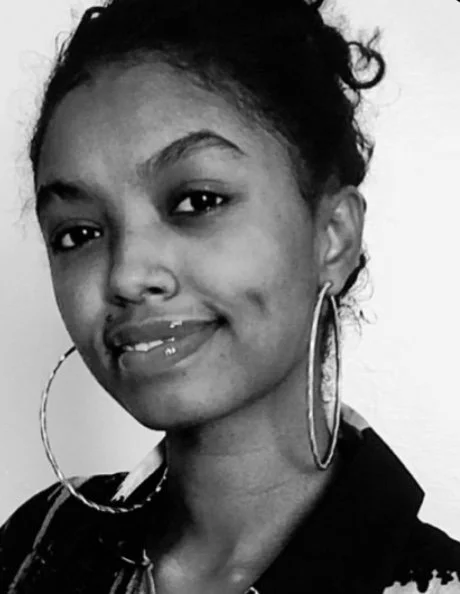
![Black and white portrait of a young woman with large hoop earrings, smiling slightly, with her hair pulled back.]()
"Four days before my exam on AWS, I was overwhelmed trying to absorb everything. Desperate, I posted on Reddit asking for help. Ted responded, introduced his unique study method, and patiently guided me through it. I was amazed at how quickly I recalled information after linking it to icons in a familiar place with the voice over. I passed the exam and still remember those icons and what they represent clearly! I'm truly grateful for Ted's help."
- Fatma Salih, Network & Security Engineer (After a 1 hour session)
-
![]()
"I found the Atlas Method a valuable way to memorize concepts and details in a unique way, blending both images in my ming with self-narrative description to layer in detail using dual-coding all tied to a specific location I imagined in my mind. Results were encouraging with the tests I ran with guidance and I plan to continue testing this method as a way to augment my visual thinking work on paper and with the iPad."
- Mike Rohde, Best Selling Author of “The Sketchnote Handbook”
-
![]()
"It’s clear to me that there is tremendous learning power and potential in this method. Ted and Dylan have creatively and diligently explored the deeper potential of the human memory, and they are teaching it in ways that people can really understand! I had such a fun experience trying this method to analyze a business consulting case — something I had never done before but that felt somewhat feasible thanks to this method. I’m very excited to see how this tool continues to reach more minds and the benefit that it will bring to learning of all kinds."
- Jack Proctor, AP Psychology Teacher
-
![]()
"Usually, I'd watch the lesson and forget everything by the next one haha. Also, I wouldn't really be able to freely reason with what I’d just learned--that would only come to me after some practice. But through snapping in my Atlas, I'm able to immediately explore different non-obvious connections between concepts I just learned and come up with solutions to related problems much easier."
- Max Gurkalov, 3D Motion Designer
-
![Close-up of a smiling woman wearing a navy blue headscarf and a floral shirt, outdoors with blurred greenery and structures in the background.]()
“I appreciated how thorough and research-based the Atlas is. Structuring memory palace principles into one evolving space, rather than scattered rooms, was new and genuinely helpful. Although I say no to homepage questions 1 and 2, narrating scenes anchored with symbols improved retention, despite needing to consciously manage where I placed what icons because I lacked the “snapping” effect. Overall, I believe the Atlas powerful for engaging with complex ideas beyond rote memorization, particularly in studying and manipulating information with purpose.”
- Awa Diagne Lo, founder of Teranga Language Solutions
-
![A young man wearing glasses with a background of pink and green blooming trees.]()
"I recently participated in a demo activity for the Mental Atlas Method, where I used this technique to learn several complex STEM topics from videos. To assess effectiveness, I compared my experience using the Mental Atlas with a control scenario in which I watched similar videos without it. Afterward, I performed an analogy and pattern-finding task involving four concepts from each group. The results were genuinely remarkable."
- Liam Daly Smith, B.S. Physics, Bates College
-
![]()
“I’ve been involved with the Atlas since early in the research process, but mainly as an advisor. Recently, I’ve gotten to use the Atlas in the most recent demo to rapidly memorize and analyze science videos, and have since become excited to share it with my friends and assist with further developing the technique for others to use in their professional and personal lives.”
- Dylan Kistler, B.S. Cognitive Studies, Vanderbilt M.A. Educational Psychology (Applied Behavior Analysis), U of Minnesota
-
![]()
"Last year, I explored dozens of mnemonic systems, searching for one that truly aligned with my ideas and creativity. The Mental Atlas Method was the turning point. I immersed myself in Ted’s demo, where he introduced four concepts and guided me in using the method to properly encode information. Through snapping using the Mental Atlas Method, I began crafting novel analogies and connections I never knew my mind was capable of. Thank you, Ted, for giving me the opportunity to expand my thinking once again."
— Keith Allen Fabrigas, Graduated High School Senior
-
![Close-up of a young man with light brown hair, smiling outdoors with trees in the background.]()
"I frequently encounter new learning techniques, and it's rare that I'm interested in using them. By contrast, the Mental Atlas Method is satisfying to use and seems to have some real use cases."
-Ben Baily, Math PhD Candidate
-
![A young man with short brown hair and fair skin standing outdoors in front of a large tree trunk.]()
"I tried out the technique and it seems like a fun and novel way to work with abstract concepts. And as someone who doesn’t actively engage their visual memory, it was cool to memorize and think about abstract concepts in this way. I’m excited to see if It will help me with recalling/ memorizing legal precedents and cases for law school. "
- Daniel Korenbaum, Incoming JD Student at Boston University School of Law
-
![Black and white portrait of a young man with wavy hair, wearing a white shirt and dark blazer, seated with a confident expression.]()
"Ted walked me through a brilliant memory technique. He taught me how to create vivid mental images to retain information, and I’m honestly amazed at how well it worked. Two days later, I can still recall a complex video he helped me break down — scene by scene. It’s rare to learn something that sticks this clearly. Ted’s ability to explain and guide the process made it incredibly intuitive. Excited to learn more!"
- Wolfe Bentinck - Account Manager, BHB America












The Science Behind the Method
The MAM approach is built upon 17 foundational insights from the Science of Learning. This brief, 10-minute article explains how these core principles come together in a unique and practical learning method.

Is the Atlas Method Right for You?
We've found that the Mental Atlas Method is effective for individuals with strong spatial abilities.
Consider the following:
Can you visualize your hometown as a single, cohesive 3D model that you can zoom around in rather than separate, disconnected scenes?
When imagining yourself outside your home, can you easily mentally point towards known landmarks without needing to mentally travel along a route first?
Is maintaining a mental image, like the front of your house, effortless rather than requiring intense focus?
If you answered "yes" to these questions, then the Mental Atlas Method will be beneficial for you.
Getting Started:
In this live video demonstration, you'll join Mike Rohde—author of the bestselling visual note-taking book The Sketchnote Handbook—as he learns the Atlas method.

In Depth User Stories

- Daniel Moffat, Neurosurgery doctor at Barts Health NHS Trust. Linkedin, Neuroscience Research
Highlight
“I believe this method is a transformative tool for students in concept-heavy disciplines. While it may require effort and adaptation at first, the long-term benefits—enhanced recall, deeper reasoning, and more transferable cognitive skills—suggest that this technique could be a revolutionary development in memory, learning, and neurocognition.”
-
“Why the Atlas Method Works: A Neuroscience Perspective
There are really only two widely accepted methods for reliably enhancing memorisation. The first is the Method of Loci, also known as the Journey Method—popularised through its use by mnemonists and competitive memory athletes. More recently, many students, particularly those in medicine, have adopted ANKI, an active recall flashcard software designed to combat the natural forgetting curve we all encounter.
Both of these techniques have significant drawbacks, including the difficulty of encoding information, mapping journeys, and building flashcard decks. These processes are labour-intensive and require substantial preparation before use. Because of these limitations, I have been seeking a better, faster way to memorise new topics and languages on the fly.
That search led me to Ted’s Atlas Method of Memorisation, which constructs a dynamic internal system of visual symbols embedded within familiar spatial environments. This system not only improves recall but also uniquely enables higher-order reasoning, abstraction, and spontaneous pattern recognition.
The technique involves converting complex concepts into simplified symbolic mental images, something I experienced in a live demo. These images can be metaphorical or analogical in nature. They are then placed within a familiar three-dimensional environment—such as a bedroom, a village, or a city. While visualizing the icon, the learner simultaneously describes a verbal explanation or meaning they want that object to represent.
As new concepts are encountered, the learner generates additional visual representations and corresponding verbal ‘voiceovers’ at different locations. Repeating this process consistently leads to the formation of a rich internal “atlas” of interconnected ideas.
From a neuroscience perspective, the Atlas Method is effective because it engages multiple cognitive systems simultaneously. Firstly, it draws on Allan Paivio’s Dual Coding Theory, which posits that information encoded both visually and verbally is more easily retained and recalled than information processed in a single modality.
The method also involves the spatial memory system, particularly the medial parietal cortex, retrosplenial cortex, and right posterior hippocampus—areas known to play dual roles in both episodic memory and spatial navigation. By embedding symbols in known physical locations, learners activate place cells and grid cells—neurons that support the brain’s internal mapping of space. These spatial frameworks act as scaffolds for memory retrieval, making information more accessible even after long delays.
What truly sets the Atlas Method apart, however, is its emphasis on abstraction and analogical reasoning. Creating symbols forces the learner to distil the essence of a concept into a visual metaphor, a process requiring integration across semantic networks. This engages the frontoparietal control network and the default mode network—the brain systems responsible for concept formation, analogy, and mental simulation.
As more symbols are added to the internal atlas, a phenomenon can occur known as “snapping”, which I experienced in my demo. This refers to the spontaneous formation of new links between previously unrelated icons or concepts based on high dimensional similarities. It is rooted in the brain’s ability to bind associations across distributed cortical areas. These moments of synthesis and insight mirror what neuroscientists describe as the co-activation of related but distinct memories—an essential process in creative thinking and problem-solving.
Initially, I found the method cognitively taxing, as it required the mental effort to unlearn familiar approaches to memorisation while simultaneously adopting a new framework. This is likely due to the recruitment of executive control systems in the prefrontal cortex, as the brain adapts to a novel learning schema. However, as with any skill, continued use redistributes the cognitive load. The learner becomes more fluent in creating symbols, abstracting key ideas, and recognising patterns. Neuroplasticity supports this transition, allowing for more efficient and automatic learning and easing the handling of complex ideas.
The Atlas Method appears to closely align with the brain’s natural tendencies for organising and integrating knowledge. It recruits multiple memory systems, strengthens associative binding, and promotes abstraction by creating an instantaneous “snapping” insight. These snapping episodes generate effortless and automatic analogies between concepts.
I believe this method is a transformative tool for students in concept-heavy disciplines. While it may require effort and adaptation at first, the long-term benefits—enhanced recall, deeper reasoning, and more transferable cognitive skills—suggest that this technique could be a revolutionary development in learning, memory, and neurocognition.
Finally, I experimented with teaching the technique to my four-year-old son. He naturally understood how to visualise an icon and instinctively placed it within a 3D landscape. While he wasn’t yet able to grasp complex ideas through recitation, this experience showed me that—despite some initial cognitive friction—anyone can improve their memory using the Atlas Method.”
- David Uttal, Professor of Education and Spatial Cognition, Northwestern University. Linkedin, Research
Highlight
“Well, I'm quite intrigued— to my knowledge, this is the first memory technique that explicitly incorporates methods for promoting what we call higher-order thinking—processes like analogy and conceptual understanding. Now, of course, at this point, the evidence is anecdotal. While it's exciting, interesting, and in my opinion, reasonably well-grounded in the literature of cognitive psychology, it does not yet have the kind of rigorous experimental evidence that would be required to convince skeptical researchers.
However, I think it's worthwhile to invest the time to conduct an open experiment to see if it works. We are also pondering for whom it works—are we making a claim for everybody or only for specific individuals? That is something we are still working on.”
-
“Well, I'm quite intrigued. One reason is that it seems like a very powerful way to help people memorize complex, detailed information. But the second reason I'm intrigued is more important to me. To my knowledge, this is the first memory technique that explicitly incorporates methods for promoting what we call higher-order thinking—processes like analogy and conceptual understanding. That's what we really care about in learning, particularly in science and other STEM fields; we want students to understand, not just memorize.
A limitation of traditional memory techniques like the Memory Palace is that they're just about memory. When I saw the demonstration Ted did using the Atlas, I was impressed that the technique was being used to create analogies between several different systems. It was really getting at the core of what we call a 'structural analogy,' which allows you to map the systems of relations from one concept to another.
As learning scientists, many of us would typically recoil from a focus on memorizing a lot of information, as it's the opposite of what we want students to do. However, in this case, the demonstrations are intriguing because they show that people can use this technique to make new insights. It allows them to see the relevant information in their mind's eye to make analogies across different sources of information. That was the most impressive thing to me.
Now, of course, at this point, the evidence is anecdotal. While it's exciting, interesting, and in my opinion, reasonably well-grounded in the literature of cognitive psychology, it does not yet have the kind of rigorous experimental evidence that would be required to convince skeptical researchers. However, I think it's worthwhile to invest the time to conduct an open experiment to see if it works. We are also pondering for whom it works—are we making a claim for everybody or only for specific individuals? That is something we are still working on.”

- Sarah Wolman, Founder and CEO of Lightbulb Learning, former Head of Partnerships for North America at LEGO, Linkedin
Highlight
“I recommend this method wholeheartedly: for scholars and for learners of all levels. You won't believe how effective it is until you try it.
It is an extraordinary methodology and a powerful addition to the field of learning sciences.”
-
“What is powerful about the Mental Atlas method is that it leverages what the brain naturally does well without effort. It capitalizes on the instantaneous recall we have for the places in our lives that we hold in our mind's eye. By attaching ideas and concepts to these places, we associate our understanding in durable ways, and we can then access these ideas anytime effortlessly.
While other approaches might be great for memorizing a deck of cards, the Mental Atlas is a deeper and more meaningful approach to learning; it allows us to recall complex ideas, as explained by the most reliable narrator we know -- ourselves.
We know that we learn differently from one another and that different kinds of remembering information come more easily for some than for others. Some might remember data and figures more easily, while others might remember words or phrases. This method levels the playing field by giving everyone the chance to absorb and remember complex and complicated concepts - including quantitative details - by imprinting them in our minds in an unforced way. We are the ones explaining to ourselves, and then we are using our own minds to lock down the information by connecting it to a familiar place.
I am particularly struck by the power of using analogies and connection to promote understanding. Sense-making and framing are such powerful tools for comprehension and memory. Here, we make sense of concepts, connect them with other concepts, and then link them to familiar places. In so doing, we create an eco-system of ideas, which we can access in an instant. This method meets the mind where it is and uses its natural strengths to build, grow and learn.
I recommend this method wholeheartedly: for scholars and for learners of all levels. You won't believe how effective it is until you try it.
It is an extraordinary methodology and a powerful addition to the field of learning sciences."

- Jason Lerner, B.S. Biochemistry and Physics, U of M-Dearborn… M.S. Chemical and Physical Biology, Vanderbilt… High school Physics Teacher (3 years)… M.S. Computer Science, University of Tennessee Knoxville (in progress). Linkedin
Highlight
“I have been building 3D models in my mind while simultaneously creating a mental voiceover while reading or watching lectures for my whole life-- in that regard, I can testify that this encoding method is extremely effective and durable. However, the novel component of the ATLAS method for me was placing all these individual visuals into a single, unified mental space. Having practiced the Atlas, and based on my educational and biological expertise, I believe this technique increases fluid intelligence. Below, you can find my technical analysis of the mechanisms behind why I believe this.”
-
“Reducing Cognitive Switching Costs
Typically, when I try to find patterns across a large set of ideas (e.g., five or more), my thinking process involves a series of pairwise comparisons. I'll compare item A to item B, then B to C, then A to C, and so on. A significant portion of my executive function is consumed by the act of managing the transition between these comparisons.
This switching cost directly hampers my ability to reason effectively. The state of one's working memory is fragile and volatile. When you transition from one thought-pair to another, it isn't a clean pause where you can later resume your previous state perfectly. Instead, you lose a significant amount of information during that transition.
The ATLAS method allows me to transition between ideas without incurring this switching cost. Because my working memory isn't damaged when I move from one idea to the next, I can dedicate more of my executive resources to the actual task of finding the patterns and analogies I'm looking for.
Eliminating the Burden of Information Storage
A related challenge occurs when I attempt to reason across a very large number of items, such as eight or nine. Without the ATLAS, a significant portion of my executive resources is spent simply trying to remember all the items in the set and ensuring I've considered all the relevant connections. My cognitive capacity is taxed just by the task of storing the information.
The ATLAS method completely eliminates this problem. I have no issue storing a large number of items in my ATLAS and finding patterns across all of them simultaneously. Crucially, there is no additional cognitive cost when I add another item to my ATLAS. This is in stark contrast to my typical thinking process, where each new item adds a large additional cost associated with remembering and managing the entire set.
The "Snapping Effect" and Automated Pattern Recognition
Perhaps the most interesting phenomenon I experience with the ATLAS is what I call the "snapping effect."
In my typical mode of thinking, even with my visualization technique, I have to actively maintain a mental "pointer" or reference to the ideas I'm trying to connect. A part of my executive function is always dedicated to the task of actively searching my mind for analogies and patterns between ideas.
This is not true in the ATLAS. Within the ATLAS, I can dedicate all of my executive resources to analyzing a single item in depth. The process of finding connections—of identifying what other items share patterns or are analogically similar—is done for me through the snapping mechanism. When I focus on one item, the related items seem to automatically "snap" into view.
Summary
In essence, the ATLAS method exchanges the high cognitive costs of traditional thinking for a more efficient system. It replaces:
A high-cost switching process that damages working memory.
A storage mechanism that requires active processing and doesn’t scale.
The mentally taxing task of actively searching for patterns and analogies.
With:
A mechanism that allows for cost-free transitions between ideas.
Storage that can requires no active maintanance and scales practically indefinitely.
The "snapping mechanism," an executive-resource-free process that automatically surfaces relevant patterns and analogies.”

Rohan Reddy, Molecular Imaging Fellow at Stanford School of Medicine (after 1 month of extensively using the Atlas). Linkedin
Highlight
“My experience with the Atlas has evolved into something that feels more like walking through my imagination than memorization. I'm now conscious of the internal schemas I create when learning, actively engaging with material rather than passively absorbing it. After consistent daily practice, I'm confident this will replace my traditional method of using flashcards entirely. The Atlas Method hasn't just enhanced my memory—it's rewired how I think, turning the overwhelming chaos of medical education into an interconnected landscape I can navigate with growing ease.”
-
From Information Overload to Effortless Recall
“A month ago, drowning in medical school's relentless information flood, I discovered the Atlas Method on Reddit. As a medical student constantly looking for new ways to retain information, I was desperate for something beyond endless Anki cards and rote memorization.
The transformation has been nothing short of revolutionary. Where I once struggled to remember lecture content hours later, I now walk out of 1.5-hour classes with concepts intact. Instead of frantically scribbling notes, I'm fully engaged, actively synthesizing information into a living mental framework. The method's visual symbol system, embedded in familiar mental spaces, didn't just improve my memory; it fundamentally changed how my brain processes information.
The breakthrough came when studying GLP-1 mechanisms. Instead of returning to textbooks, I worked entirely within my mental atlas, spontaneously connecting gut hormones to brainstem processing, then to neocortex predictions and hippocampal memory formation. What surprised me most was how these connections emerged naturally, a phenomenon I'd never experienced despite years experimenting with everything from the Feynman technique to mind mapping.
My experience with the Atlas has evolved into something that feels more like walking through my imagination than memorization. I'm now conscious of the internal schemas I create when learning, actively engaging with material rather than passively absorbing it.
After consistent daily practice, I'm confident this will replace my traditional method of using flashcards entirely. The Atlas Method hasn't just enhanced my memory—it's rewired how I think, turning the overwhelming chaos of medical education into an interconnected landscape I can navigate with growing ease.
This isn't just another study technique. It's a complete paradigm shift in how we engage in critical thinking. For any student drowning in information overload, I fully believe the Mental Atlas offers a genuine path to escape the memorization trap.”
Fatma Salih, Network and Security Engineer (After her second two hour tutoring session). Linkedin
Highlight
“The Atlas Method completely shifted how I approach learning… I challenged myself to use the Atlas for a 25-minute lecture on the mathematics behind the Bitcoin protocol. This is the kind of material I usually find nearly impossible to follow, but by building icons in real time as I watched the video (no pausing), I was able to stay engaged and track the entire explanation. Even better — I actually enjoyed the process. What excites me most now is how scalable this approach is. I’ve only just started building my Atlas, and I’m already experiencing deeper insights and more meaningful connections. Before this, I often felt stuck — studying hard but forgetting quickly. Now, learning feels structured, connected, and way more empowering. Next, I plan to use it to learn Italian and networking topics to advance my career, and I’m genuinely excited to see how it will impact my learning in the long term.“
-
“After my first experience with the Atlas method — which helped me pass a difficult exam on short notice — I decided to go deeper. I had a focused two-hour session to learn how to apply it beyond just cramming for a test, and it completely shifted how I approach learning.
For example, I watched an 8-minute video on a networking protocol I’d previously struggled to retain. Normally I’d have to rewatch it or take notes to remember anything. This time, using the Atlas method in real time — with barely any pausing — I fully understood it and retained the content effortlessly.
Then I challenged myself with a 25-minute lecture on the mathematics behind the Bitcoin protocol. This is the kind of material I usually find nearly impossible to follow, but by building icons as I listened, I was able to stay engaged and track the entire explanation. Even better — I actually enjoyed the process.
What surprised me most was how easily I began drawing connections between the Bitcoin lecture and the networking topic. With Atlas, the analogies and patterns just clicked into place. When I analyzed one video, my attention would snap to the other video’s icon, and the shared pattern would become immediately obvious. I even tried doing the same thing without using the method: finding analogies and patterns between two complex concepts I already knew well but weren’t in my Atlas. It felt way harder and far less productive, and the connections I found were much more surface level.
What excites me most now is how scalable this approach is. I’ve only just started building my Atlas, and I’m already experiencing deeper insights and more meaningful connections. Next, I plan to use it to learn Italian and networking topics to advance my career, and I’m genuinely excited to see how it will impact my learning in the long term — especially in areas where I’ve struggled with retention in the past.
Before this, I often felt stuck — studying hard but forgetting quickly. Now, learning feels structured, connected, and way more empowering. The Atlas method has made a real difference in how I learn and what I’m able to retain.”

Max Gurkalov, 3D Motion Designer, Instagram
Highlight
“After doing the demo and practicing the Atlas on my own, I can confidently say I love it! I stay engaged while turning abstract concepts into vivid, structured mental models. I’ve been applying it to my cybersecurity studies, and the results have been remarkable. Usually, I'd watch the lesson and forget everything by the next one haha. Also, I wouldn't really be able to freely reason with what I’d just learned--that would only come to me after some practice. But through snapping in my Atlas, I'm able to immediately explore different non-obvious connections between concepts I just learned and come up with solutions to related problems much easier.”
-
“Back in March 2025, Ted and I began calling weekly for him to update me on the development of a new memory technique he was developing. We discussed the underlying research extensively, and I was impressed by the memory benchmarks Ted could surpass using the technique as well as how it built upon evidence-based techniques pairing visual and verbal information for tasks such as reading comprehension. I was torn between the apparent potential of the Atlas, and the feeling that it sounded “too good to be true”.
For months I remained skeptical and avoided implementing the technique personally. I tried some short demos on personal goal-setting and comprehending an academic History paper in May, but I wasn’t confident about how well I could use the Atlas independently. I felt a lot of uncertainty, even a bit like an imposter, trying to make myself learn and remember with such an intentional technique.
Finally, having understood a lot of Ted’s underlying research but not feeling confident giving a personal testimony about the effectiveness of the Mental Atlas, I decided to put it to the test using Ted’s latest demo focused on digesting a set of math and science videos. When I watched the first video without using the Atlas (rewatching it once and taking handwritten notes), my recall and analysis of the content felt muddy and tedious.
Then, I tried using the Mental Atlas to memorize and analyze three similar videos. To be specific, I watched the those videos once each, no pausing, and didn’t take notes. Instead, I simply imagined placing three-dimensional objects from the videos into a familiar place (a Spanish classroom) and used my inner voice to describe what I heard in the video about each object.
When I began to recall and analyze the three videos as a group, with goal of finding as many patterns as I could between the concepts, I felt the difference immediately. My attention snapped to relevant analogies and comparisons effortlessly, and I recalled more specific details about each video than I had when I used conventional note-taking. After this personal experience, I now plan to utilize the Atlas in multiple upcoming tasks for game designs I am working on, and feel far more eager to share the Atlas with close friends (for their own unique use cases).”

Liam Daly-Smith, B.S. Physics, Bates College (After the most recent demo). Linkedin
Highlight
“I recently participated in a demo activity for the Mental Atlas Method, where I used this technique to learn several complex STEM topics from videos. To assess effectiveness, I compared my experience using the Mental Atlas with a control scenario in which I watched similar videos without it. Afterward, I performed an analogy and pattern-finding task involving four concepts from each group. The results were genuinely remarkable.”
-
“Although I had previous experience with the Mental Atlas, this was the first time I had received explicit training on how to apply the method while watching lectures in real-time. The results were genuinely remarkable. My retention and comprehension when using the Mental Atlas for 3D visualization and reasoning were significantly better compared to when I did not use the method. I would analyze the concept from one video and my attention would just snap to how another video connected.
Throughout my academic career, especially during my undergraduate studies, I frequently relied on repetitive studying—often needing to drill concepts repeatedly to remember them. However, I’ve found that topics learned months ago using the Mental Atlas remain accessible with relative ease.
Additionally, building 3D mental models made it easier for me to engage deeply with the material. This demo demonstrated a highly effective way to absorb complex lectures in real-time, leading to exceptional retention and deeper understanding. I plan to continue using the Mental Atlas Method as I prepare for graduate school.”

Dylan Kistler, Behavior Specialist & M.A. Educational Psychology, Linkedin
Highlight
“I’ve been involved with the Atlas since early in the research process, but mainly as an advisor. Recently, I’ve gotten to use the Atlas in the most recent demo to rapidly memorize and analyze science videos, and have since become excited to share it with my friends and assist with further developing the technique for others to use in their professional and personal lives.”
-
“For years, I’ve been fascinated by memory techniques and methods that enhance intelligence—especially image streaming and the memory palace. While these tools were helpful, I wasn't really consisten with them: image streaming is quite fatiguing and requires great consistency for gains, while mind palace always felt not flexible enough to use it in real time. And even then, accessing knowledge was hard because you need to mentally walk through the palace.
Then I discovered Atlas. After going through the demo on my own and clarifying some questions with Ted afterwards and trying it out on real lessons, I can confidently say that I love it! It keeps me fully engaged, turning abstract concepts into vivid, structured mental models. Not only do I remember the concepts vividly, but also I'm able to understand things much deeper. Ideas don’t just stick; they click, fitting together like pieces of a larger puzzle.
I’ve been applying it to my cybersecurity studies, and the results have been remarkable. Usually, I'd watch the lesson and would forget everything by the next one haha. Also, my understanding would suffer because I wouldn't really be able to freely reason with some concepts - that would only come to me after some practice. Not anymore. Through the so-called snapping effect in the Atlas method, I'm able to explore different non-obvious connections between concepts, imagine different ways of applications of such concepts and come up with solutions to related problems much easier.
A huge thanks to Ted for creating and sharing this method with such clarity and enhtusiasm.”

Shugri Mohamed, Student Nurse at Frimley Health NHS Foundation (after finding the technique on Reddit and engaging in the most recent demo). Linkedin
Highlight
“I was amazed at how easily I could snap to my visual icons/images to retrieve information and connect them, without having to make mnemonics or travel through a memory palace journey. Whereas, without the atlas method it was hard to connect three different concepts, without getting cognitive overload. I'm really excited to use this method in studies, as I am a nursing student, and to grow and get better with this technique to learn things quicker.”
-
“I came across the Atlas Method recently on Reddit as I was exploring memorisation techniques such as memory palaces (method of loci) and mnemoniics. I was intrigued to explore this new method which is undergoing research be fore I embarked on visual memorisation.
I had the introductory training with Theodore, and was surprised how easy it was to recall information from videos, without having to write down concepts. The training involved watching a set of videos while utilising the atlas method to retain information, and the fourth one was a control to show the difference in retention, then connecting three different concepts from the videos.
I was amazed at how easily I could snap to my visual icons/images to retrieve information and connect them, without having to make mnemonics or travel through a memory palace journey. Whereas, without the atlas method it was hard to connect three different concepts, without getting cognitive overload.
I'm really excited to use this method in studies, as I am a nursing student, and to grow and get better with this technique to learn things quicker. Very grateful to get this training and looking forward to providing feedback. Thank you”

About the Authors
Ted Shachtman
Elementary Teacher, Former High School Math Department Head, & Software Engineer
B.S Education & Cognitive Studies, Vanderbilt
Computer Science Masters Candidate, U.C. Boulder
"For most of my life, traditional learning methods didn’t quite align with how my mind naturally works. I'd often grasp individual points during lectures or readings, but struggled to hold onto the overall structure and argument by the end. On the other hand, I've always had a strong memory for visual and spatial information, yet it wasn’t clear how to translate this strength into practical cognitive skills that mattered to me. Motivated by this persistent challenge, Dylan and I spent the past year diving into cognitive science research and experimenting with various learning techniques.
Through this exploration, we developed the Mental Atlas Method, an approach that has genuinely transformed my learning experience. Instead of feeling overwhelmed or drawing a blank, I now visualize clear, interconnected idea maps that remain organized and accessible. This technique has enabled me to confidently master complex math content I previously found daunting and has significantly supported my journey toward a master's degree in computer science.
Feedback from other users, along with my own experience, suggests that this method has the potential to greatly benefit individuals who naturally think visually and spatially, helping them improve skills in fluid reasoning, creativity, and knowledge acquisition. Honestly, I'm still amazed that this approach exists and can be so effective.
I'm especially grateful for the positive impact this method has already had on early users. Witnessing people like Rohan and Fatma finally access and retain information in ways they've always hoped for has been truly inspiring.
I'm excited about the future of this technique and look forward to continuing to share our research and discoveries."
Dylan Kistler
Board Certified Behavior Analyst, tabletop game designer, and Learning Sciences and Special Education researcher.
B.S. in Cognitive Studies, Economics and Creative Writing, Vanderbilt University.
M.A. in Educational Psychology (concentration in Special Education).
“For a decade, I’ve been fascinated by learning, especially as it pertains to play, games, and neurodiverse populations. Typical limitations on my working memory - the information a brain can hold and use for a current task - have always forced me to do extensive note taking during creative endeavors. Even then, those notes often cannot be called to mind immediately when needed. I offloaded a lot of critical information to my notebooks for when I (hopefully) reviewed them, and the benefits to my memory of having handwritten notes still had mixed results in allowing me to recall a helpful idea at the perfect time.
Ted approached me early in his research for the Mental Atlas. Through regular correspondence with Ted, I was able to follow his research and help iterate on this new learning technique. After seeing him pass benchmarks not achievable by most memory champions in a short amount of time, I knew I needed to try the technique myself to see if Ted’s brain was simply extraordinary, or if the his Mental Atlas technique was the real deal. Still, I hesitated for months, fearing the Atlas was simply too good to be true.
In May, I tried implementing the Mental Atlas for a variety of smaller use cases, such as digesting a history paper and finding insights across a list of personal goals. The sensation of using the Mental Atlas - where your attention snaps to relevant information stored as effortlessly as snapping to images of furniture in your own home - was pretty incredible. However, I still didn’t feel confident implementing the Atlas on my own, or in recommending it to friends to try out. Then, I finally put the Atlas to the test. I used my best conventional note-taking techniques to memorize a science video on a new-to-me topic, then did the same for a few videos using the Mental Atlas. The difference was stark, with the effortless analogies and comparisons coming from my recall of videos stored using the Atlas genuinely impressing me. Not to mention, using the Atlas while watching the videos did not take me any additional time.
Now, I am assisting in the research and refinement of the Atlas technique in order to help individuals with diverse academic, professional, and personal goals to use their working memory more intentionally. I believe the Atlas has tremendous potential, and want to see as many people as possible get involved in trying it out, offering authentic feedback, and helping humankind by finding the best use-cases for what appears to be an unparalleled new way of memorizing, analyzing, and thinking more broadly.”
Contact Us
If you followed along with Mike Rohde in the live demo walkthrough and are excited to learn more, want to share your experience and have your testimonial featured on the website, or you are a cognitive science / neuroscience researcher interested in the technique, please reach out to schedule a call.
All these options are entirely free.